Solar 101
Do Solar Panels Work In The Winter?
Yes, and in some ways Ontario winters help. Here's what actually happens to your system between November and March.
Yes, and in some ways Ontario winters help. Here's what actually happens to your system between November and March.
It's a reasonable worry in a province with real winters: do solar panels actually produce power once the snow starts falling? The answer is yes, panels keep working through winter, and the physics are a little different from what most people expect.
Solar panels are semiconductors, and like most electronics, they run more efficiently in cold temperatures than in extreme heat. A panel on a cold, sunny January day can outperform the same panel on a hot July afternoon, watt for watt. The bigger factor in winter isn't temperature, it's the shorter days and lower sun angle reducing total daily sunlight hours.
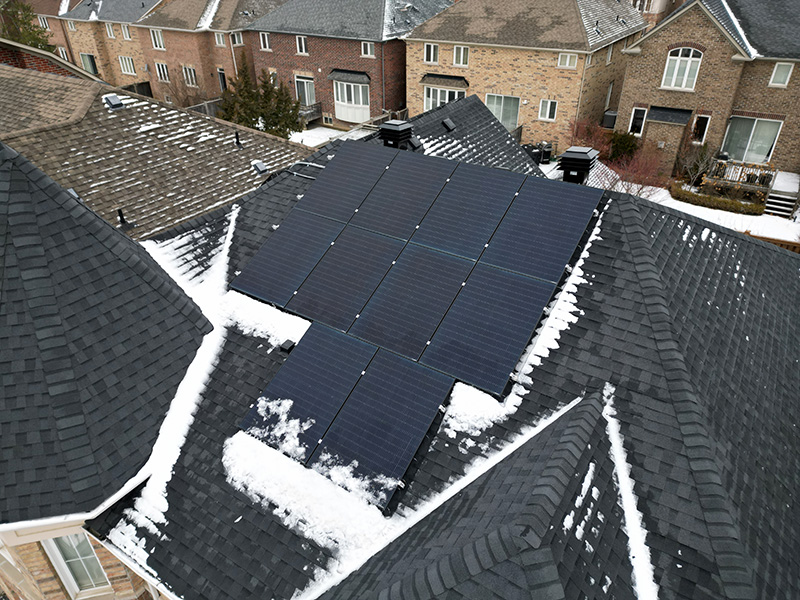
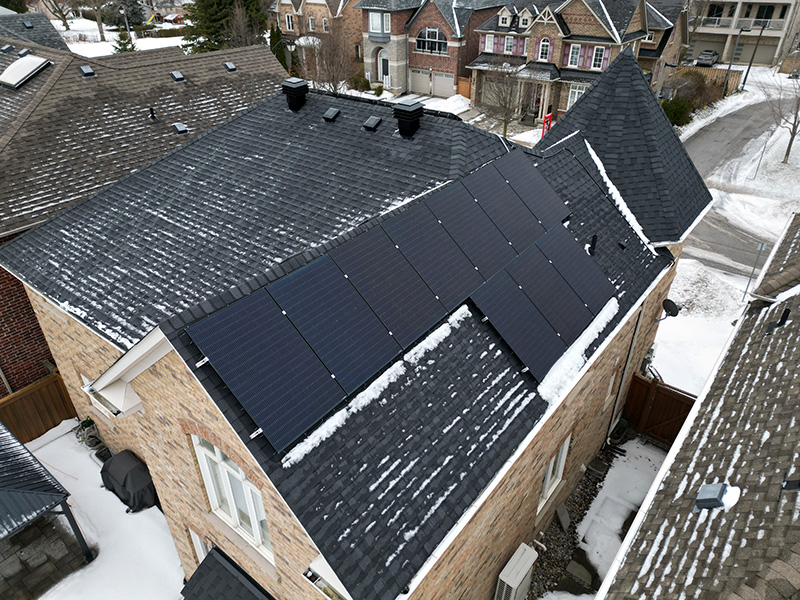
A dusting of snow typically melts or slides off panels faster than you'd think, since panels are mounted at an angle and the dark surface absorbs heat from available sunlight. Heavier accumulation can block production temporarily, but most systems clear naturally within a day or two of fresh snowfall in GTA conditions. We don't recommend climbing onto your roof to clear panels yourself.
Our racking, flashing, and weatherproofing choices account for Ontario's freeze-thaw cycles and heavy snow load, details a company designing systems for a warmer climate doesn't think about until a roof leak shows up two winters later. Every residential solar install we do is engineered for local conditions, not adapted from a generic template.
When we size your system, we build the proposal from a full twelve months of your actual hydro billing, which already accounts for lower winter output balanced against stronger spring and summer production. That's why we model your net metering credits across a full year rather than any single season. Want to see what that looks like for your home? Request a free assessment or run a quick estimate on our solar calculator.