Solar 101
Can You Make Your Home 100% Renewable in Ontario?
Seven ways homeowners try to run on renewable energy, from rooftop solar to batteries, and which ones actually make sense for a GTA or Ontario home.
Seven ways homeowners try to run on renewable energy, from rooftop solar to batteries, and which ones actually make sense for a GTA or Ontario home.
More Ontario homeowners are asking the same question: could my house run entirely on clean, renewable energy? The idea is appealing, especially as electricity rates and awareness of climate change keep rising. The honest answer is that it depends on your property, your budget and which technologies suit where you live. Below are the seven options homeowners most often consider, along with a realistic look at how each one fits an Ontario home, whether you are in downtown Toronto or on a larger lot in the wider GTA.
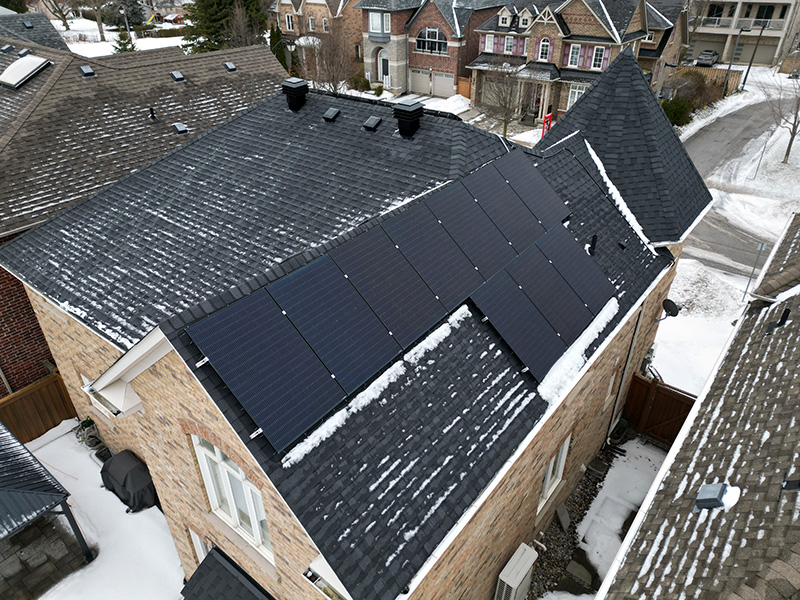
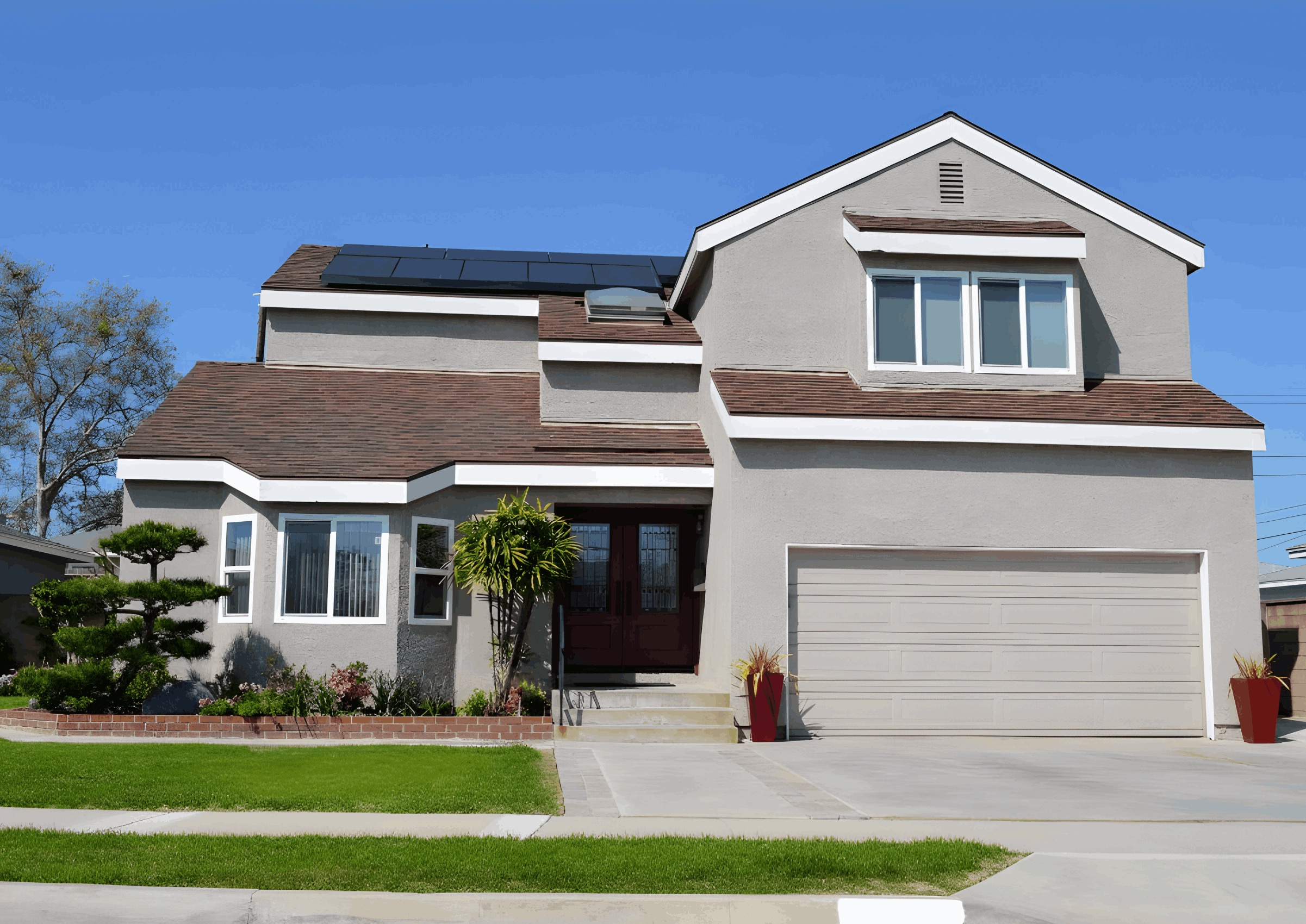
For most Ontario homes, rooftop solar is the practical starting point. A properly sized solar photovoltaic (PV) system on your roof or, where space allows, a ground mount array in the yard can generate a large share of the electricity your household uses over a year. Through net metering, any extra power you produce on sunny days is exported to the grid for credits that offset what you draw at night or in winter. You can read how that works in our guide to net metering in Ontario.
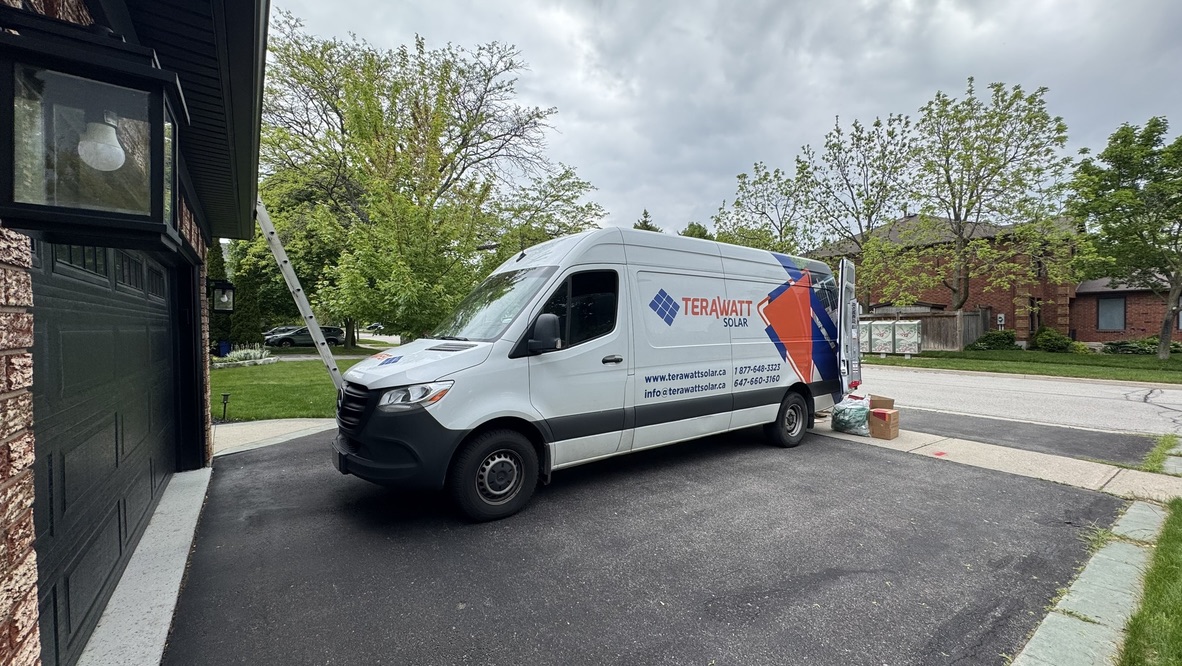
Because this is the technology that does most of the heavy lifting, it matters who installs it. Look for a company with licensed electricians on staff, a clear warranty and a free site assessment. Terawatt Solar installs residential solar across the GTA with our own ESA-licensed crews and no subcontractors.
Small wind turbines can work for homeowners with a large property, steady wind and high energy use. They need ample open space, tolerance for some noise and, in most municipalities, planning permission and compliance with local zoning rules. In built-up parts of the GTA, most lots are simply too small or too sheltered to make a home turbine worthwhile, so research the wind resource at your exact location before committing.
Cooling is a growing share of household electricity use during Ontario summers. In practice, "solar air conditioning" usually means pairing a rooftop PV system with an efficient electric air conditioner or heat pump, so the same sunny afternoons that drive cooling demand also drive solar production. Some specialized systems use solar heat directly for cooling and hot water at the same time. Whether that makes sense depends on how much cooling your home really needs, so ask for a usage-based estimate before investing.
Biomass fuel is made from organic material such as agricultural residue, scrap lumber and other wood waste. Burning it can emit fewer net greenhouse gases than fossil fuels when the material would otherwise be landfilled, and it keeps some organic waste out of the waste stream. For most urban homes it is a heating option rather than an electricity option, and air quality rules and fuel supply are important local considerations.
Solar thermal collectors use the sun's heat to warm water directly, and the technology is one of the more established ways to put renewable energy to work at home. Another route is to use PV power with an electric heat pump water heater. Either way, water heating is often a good target because it is a steady, predictable load in almost every household.
If your property has a flowing stream, small-scale hydropower can provide round-the-clock energy, which is its big advantage over solar and wind. It is also the most site-specific option on this list. It needs a suitable watercourse, a generator, professional engineering help, and in Ontario, approvals that can involve conservation authorities and provincial agencies. Most homeowners will not have a site that qualifies.
A home battery, such as the Tesla Powerwall, stores electricity so you can use it later, for example in the evening or during an outage. Paired with solar panels, a battery can capture midday production and release it when you need it, which brings a home closer to energy independence. Learn more about our battery storage options, or read how batteries are sized in our post on battery sizing for PV systems.
Going fully off the grid is rarely necessary or economical in the GTA. Most homeowners instead aim to produce as much clean power as they use over a year while staying connected to the grid for back-up and net metering credits. Ontario's grid already draws on a large share of low-carbon sources, so every kilowatt hour your roof produces adds to that clean supply while cutting your own bill.
For nearly every Ontario homeowner, the first and most effective step is solar, with battery storage added later if resilience matters to you. A free site assessment will tell you how much of your usage a rooftop system could cover. You can also try our solar calculator for a quick estimate, or contact our team to book your assessment.
Over a full year, a well-sized solar system with net metering can offset most or all of a home's electricity use. Most homeowners stay connected to the grid for night-time and winter power rather than going fully off-grid.
Rooftop solar is the most practical choice for most GTA properties, since wind, hydro and biomass depend heavily on lot size and location. Battery storage can be added for backup power.
No. With net metering, the grid acts as your storage. A battery is optional and mainly useful for backup power or for using more of your own production.