Industry Insight
The Impact of Renewable Energy on Our Globe and Our Future
Renewable energy and the UN Sustainable Development Goals: global impacts, the outlook for demand, and how Ontario homeowners can be part of the change.
Renewable energy and the UN Sustainable Development Goals: global impacts, the outlook for demand, and how Ontario homeowners can be part of the change.
Renewable energy is reshaping how the world powers itself, and Ontario homeowners and businesses are part of that shift. This article looks at the global picture, what the future of renewables may hold, and how rooftop solar in the Greater Toronto Area connects to the bigger story.
In 2015, the United Nations General Assembly adopted the Sustainable Development Goals (SDGs), a set of 17 goals and 169 targets that outline a path toward ending poverty, reducing inequality and protecting the planet. Two of those goals bear directly on energy: Goal 7, Affordable and Clean Energy, and Goal 13, Climate Action. A just and ecological transition for the world includes a steady move toward renewable energy.
The benefits of that transition are environmental, economic and social. Environmentally, renewables are a climate solution because they produce electricity with little to no operating emissions. Economically, a clean energy transition can create local employment and new industries. It can also improve public health by reducing air pollution, support impact investment, and contribute to community and income development.
The world's population continues to grow, and so does energy demand from homes, communities and organizations everywhere. To build resilience and protect the environment, energy systems must adapt. The International Energy Agency (iea.org) publishes regular data on the global energy mix and the pace of the renewable build-out, and its reports consistently show renewables taking a larger share of electricity generation each year. Countries such as Germany, Sweden and Costa Rica have been among the leaders in the shift.
As demand for renewable energy rises, economies of scale help bring costs down, which makes the choice both an ethical one for the planet and an economical one for the long term.
Exact figures change from year to year, so for the latest numbers, consult the International Energy Agency and Natural Resources Canada.
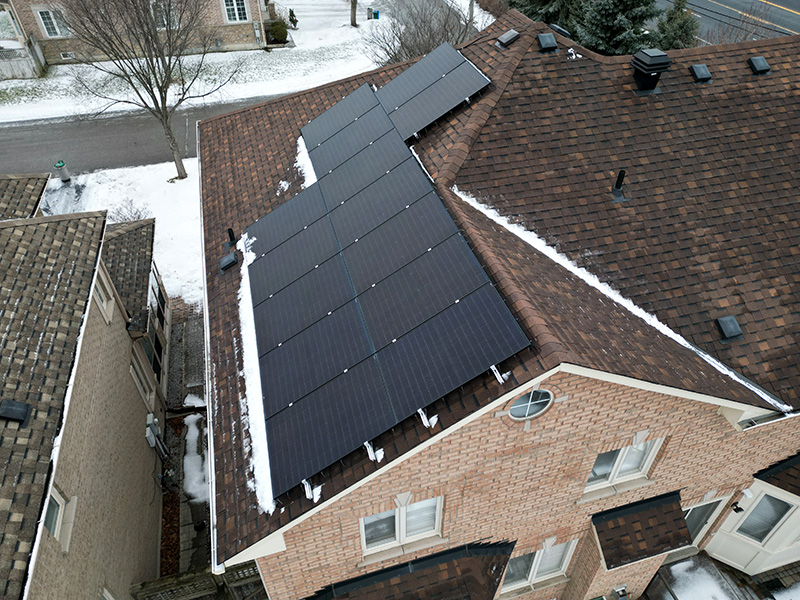
You do not have to wait for a national or global policy shift to take part. A rooftop solar system turns your own home or business into a small power plant, cutting your reliance on the grid and giving you more control of your energy costs. In Ontario, net metering lets surplus power be credited against future bills; see our guide to how net metering works in Ontario.
Terawatt Solar designs and installs systems for homes and businesses across the GTA with ESA-licensed in-house crews. Explore our residential solar and commercial solar services, check current incentives, or request a free site assessment to see what solar could do for you.
Goal 7, Affordable and Clean Energy, and Goal 13, Climate Action, are the two most directly tied to renewable energy.
Installing rooftop solar lets you generate your own clean electricity and reduce your reliance on the grid. A free site assessment is a good first step.